Small Business Warehouse Management: A System That Scales from Garage to Containers
By Canopy Team
Quick answer
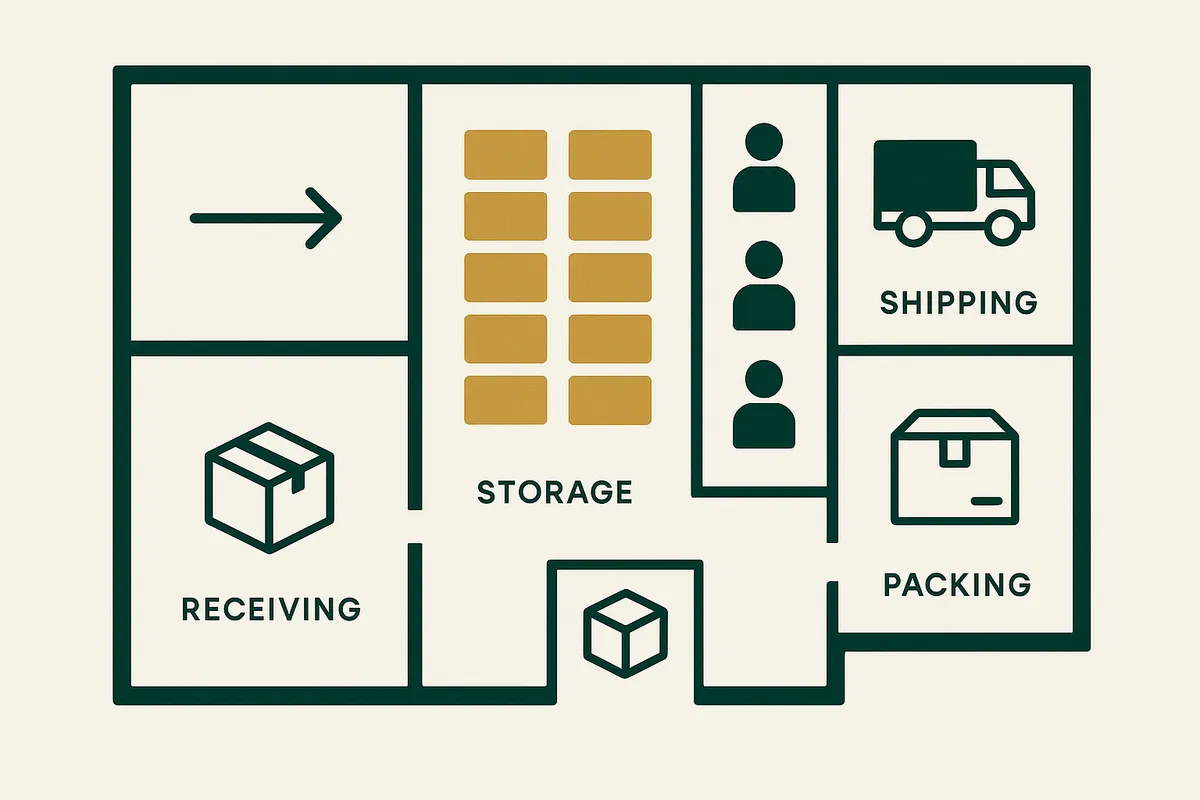
Small business warehouse management isn't about expensive WMS software or Amazon-style automation. It's about having a system that lets you find any product in under 30 seconds, pick orders accurately, and know exactly what stock you have in each location. The most effective system for UK small businesses scaling past their first warehouse is a multi-location setup: one primary pick location for daily order fulfilment, plus overflow storage locations for bulk stock. Bailey & Coco runs 2,845 SKUs across a garage (daily picks) and 4 shipping containers (bulk storage), with a simple transfer-and-replenish workflow that maintains 99.6% pick accuracy.
The small warehouse problem nobody talks about
Every growing ecommerce brand hits the same wall. You start fulfilling orders from a spare room or garage. It works fine at 10 orders a day. At 30 orders a day, you're stepping over boxes. At 50+ orders a day, you're losing products, mis-picking, and spending more time searching for stock than actually packing orders.
The conventional advice is: get a warehouse unit. But UK commercial warehouse space costs £6-12 per square foot annually, and most landlords want 3-5 year leases. For a brand doing £500K-£2M revenue, that's a significant fixed cost commitment before you know if the growth will sustain.
The gap between "outgrown the garage" and "ready for a proper warehouse" is where most small businesses struggle. You need more space, but you don't need 5,000 sq ft of racked warehouse with a loading bay. What you need is a system that works in imperfect spaces.
The 5-location system: how Bailey & Coco manages 2,845 SKUs
Bailey & Coco is a dog accessories brand with 152 pattern variants across collars, harnesses, leads, bandanas, and bow ties. Total active SKU count: 2,845. They import from China in bulk (minimum order quantities of 50 per SKU per production run) and sell direct via Shopify.
Their setup:
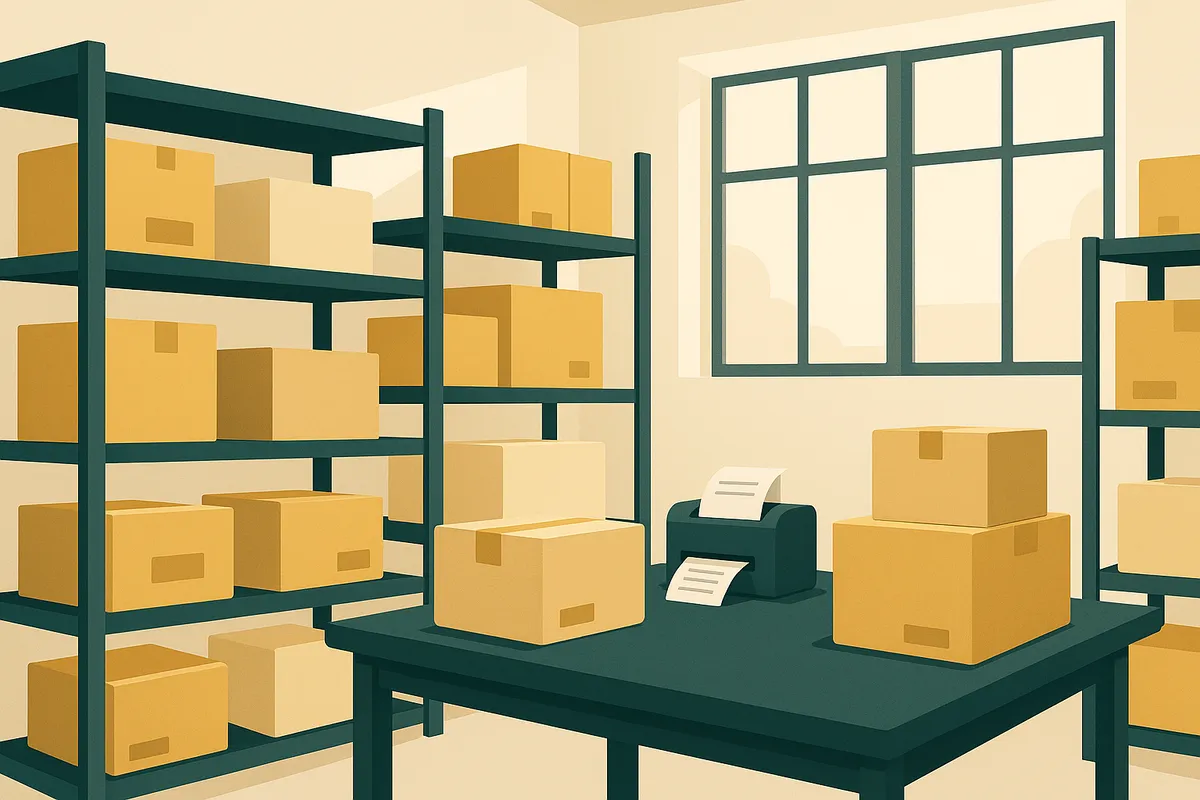
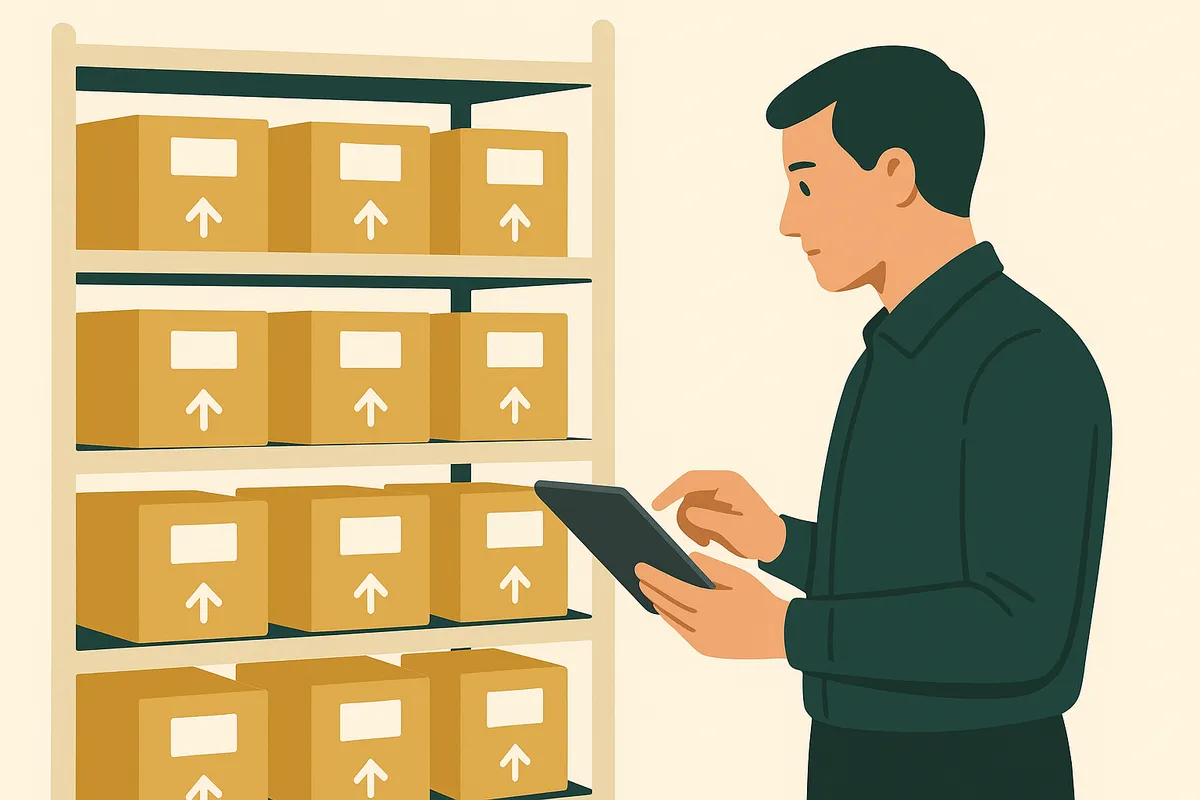
Location 1: The Garage (Daily Pick Location) This is the primary fulfilment area. It holds 1-2 weeks of stock for each active SKU, organised on shelving by product type and then by pattern. This is the only location orders are picked from. It has a packing station, label printer, and shipping supplies.
Locations 2-5: Shipping Containers (Bulk Storage) Four 20ft shipping containers on site, each costing about £150/month to rent. These hold bulk stock from import shipments — the 70-day production runs that arrive in large quantities. Containers are organised by arrival date and product category.
- Container 1: Current season collars and harnesses (bulk) - Container 2: Current season leads, bandanas, and accessories (bulk) - Container 3: Next season / pre-season stock - Container 4: Clearance, returns, and slow-moving lines
The containers are not picked from directly. Stock is transferred from containers to the garage in controlled replenishment cycles — typically twice per week.
Setting up zones inside your pick location
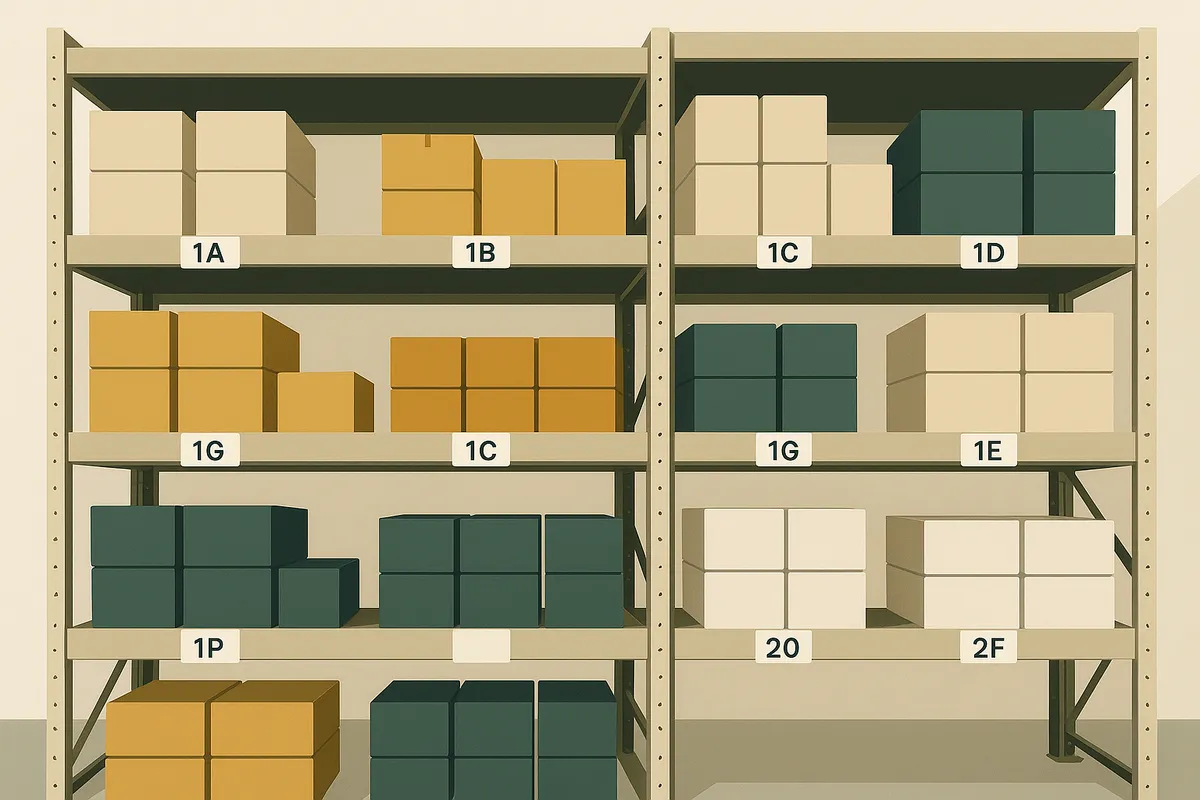
The garage — or whatever your primary pick location is — needs to be organised into zones. This isn't about buying expensive shelving systems. It's about creating predictable locations so anyone (not just you) can find a product.
Bailey & Coco uses a simple zone system:
Zone A: Fast movers (top 20% of SKUs by weekly velocity) Placed at eye-to-waist height, closest to the packing station. These are the products you're picking multiple times per day. Minimise walking distance.
Zone B: Medium movers (middle 50%) Standard shelving, still accessible but not prime real estate. You're picking these a few times per week.
Zone C: Slow movers (bottom 30%) Higher shelves or further from the packing station. Picked less frequently, so the extra walking time doesn't matter.
Within each zone, products are organised by type first (all collars together, all harnesses together), then by pattern alphabetically. Every shelf position has a location code — A1-01, A1-02, etc. These codes are recorded in Shopify as the location's shelf reference.
This sounds obvious. But most small businesses just put products wherever there's space, which means the person who packed the stock away is the only one who knows where anything is. That's a single point of failure that breaks the moment you hire help or get sick.
The pick-pack-ship workflow
Efficient picking is about batching, not speed. Running to the shelves for every individual order is the slowest possible method. Here's the workflow Bailey & Coco uses:
1. Batch orders — print pick lists for 20-30 orders at a time. Group by single-item orders (fastest to process) and multi-item orders (require more picking).
2. Wave picking — for multi-item orders, pick all items for the entire batch in one pass through the warehouse. Use a trolley with compartments or numbered bins — one bin per order.
3. Scan and verify — when packing, scan each product barcode against the order. This catches mis-picks before the parcel is sealed. Bailey & Coco's mis-pick rate dropped from 3.2% to 0.4% after implementing barcode verification.
4. Pack and label — pack using standardised box sizes (3 sizes cover 95% of orders). Print shipping labels in the same batch sequence as the pick list.
5. Carrier collection — schedule daily collections rather than doing individual drop-offs. Even at 30 orders/day, a daily collection saves 30-45 minutes versus trips to the post office.
The entire process from printing pick lists to handing parcels to the carrier should take 2-3 minutes per order at this scale. If it's taking longer, the bottleneck is usually product findability — which goes back to the zone system.

Replenishment: keeping your pick location stocked
The most critical process in a multi-location setup is replenishment — moving stock from bulk storage to the pick location before you run out.
Bailey & Coco runs replenishment twice weekly (Monday and Thursday mornings). The process:
1. Check weeks cover at the pick location — for each SKU, calculate how many weeks of stock remain in the garage based on current sales velocity. Any SKU below 1 week of cover in the pick location gets flagged.
2. Generate a transfer list — for every flagged SKU, create a transfer from the relevant container to the garage. The transfer quantity is enough to bring the pick location back to 2 weeks of cover.
3. Physical transfer — physically move the stock from containers to the garage. Update quantities in Shopify using a stock transfer (Settings > Locations > Transfer).
4. Shelf the stock — put items into their designated zone/shelf location in the garage.
This process takes about 2 hours per replenishment cycle for Bailey & Coco's 2,845 SKUs — but it means the pick location is always stocked and orders can always be fulfilled from the garage without anyone needing to dig through containers during a busy packing session.
The key metric: your pick location should never have more than 2-3 weeks of stock for any SKU. More than that and you're wasting prime shelf space. Less than 1 week and you risk stockouts between replenishment cycles.
Track weeks cover across all your locations
Canopy gives Shopify brands the inventory clarity they need to grow.
When to use 3PL versus in-house fulfilment
The 3PL (third-party logistics) question comes up for every growing brand. Here's an honest assessment of when each option makes sense.
Stay in-house if: - You're doing under 100 orders/day — the volume doesn't justify 3PL minimum fees - Your products need quality checks, personalisation, or custom packaging that 3PLs struggle with - Your product range changes frequently (seasonal patterns, limited editions) — 3PL onboarding per new SKU is slow - You're importing in bulk and want to inspect goods on arrival — 3PLs charge for this - Your margins are tight and 3PL pick-and-pack fees (£1.50-3.00 per order) would make some products unprofitable
Bailey & Coco stays in-house because their 152 patterns change seasonally. Onboarding hundreds of new SKUs at a 3PL quarterly would be expensive and error-prone.
Consider 3PL if: - You're consistently above 150 orders/day and fulfilment is consuming your entire working day - Your product range is stable (same SKUs year-round) - You need multi-location fulfilment (e.g., UK and EU warehouses) - You want to remove the physical space constraint entirely - Your time is more valuable spent on marketing, sourcing, or product development
The hybrid approach works well too — keep your fast-moving top 50 SKUs at a 3PL for rapid fulfilment, and fulfil the long tail in-house. But this adds complexity to your inventory tracking, which is where a proper inventory system becomes essential.
Technology for small warehouse management
You don't need a £10,000/year WMS (warehouse management system) to run a small warehouse effectively. Here's the technology stack Bailey & Coco uses, ranked by impact:
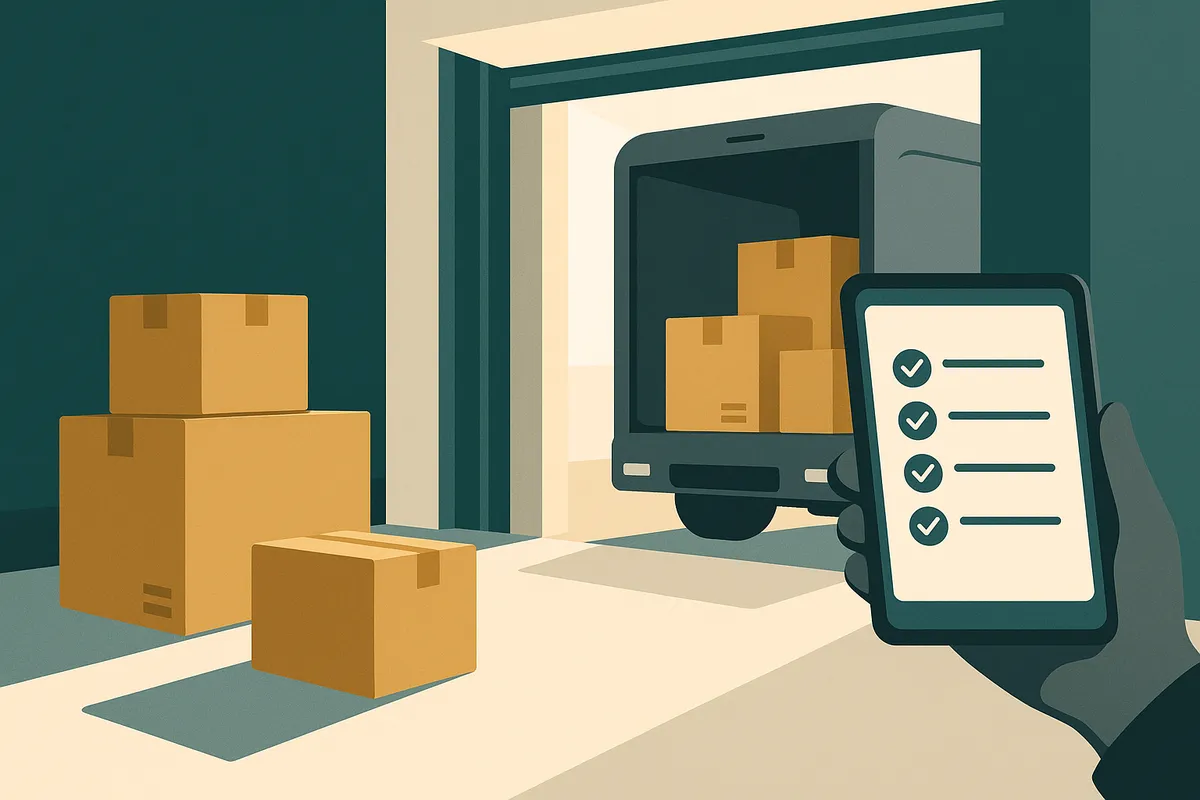
1. Barcode scanner (£150-300) — the single highest-impact investment. A Bluetooth scanner connected to your phone or laptop eliminates mis-picks and makes stock counts 10x faster. The Zebra CS60 or Socket Mobile S700 are the go-to options for small operations.
2. Label printer (£200-400) — a thermal label printer (Zebra GK420d or Rollo) for shipping labels and barcode labels. Pays for itself in time saved versus handwriting or inkjet printing.
3. Shopify multi-location inventory — use Shopify's native location feature to track stock at each location separately. This is free and built into every Shopify plan.
4. Inventory management app — Canopy or similar for weeks cover tracking, reorder points, and transfer suggestions. This is what tells you when to replenish from containers to the pick location.
5. Simple shelving with location labels — industrial wire shelving from Costco (£50-100 per unit) with printed location labels. Nothing fancy, but every position needs a code.
Total technology investment for a best-in-class small warehouse setup: under £1,000 upfront plus software subscriptions. Compare that to the cost of a single mis-picked order (return shipping, replacement product, customer service time, potential negative review): £15-30 per incident. At a 3% mis-pick rate on 50 orders/day, that's £7,000-15,000 per year in error costs.
Frequently Asked Questions
Start with a single pick location organised into zones (fast, medium, slow movers). Add a barcode scanner for pick accuracy. Use Shopify multi-location to track stock in separate areas. If you have bulk stock, set up a replenishment workflow from storage to pick area on a fixed schedule — twice weekly works for most small businesses.
A 20ft shipping container on a secure site typically costs £100-180 per month in the UK depending on location. A 40ft container is £150-250 per month. This is significantly cheaper than commercial warehouse space at £6-12 per square foot annually. Containers are ideal for bulk overflow storage but not for daily picking due to limited access.
The Zebra CS60 (around £250) and Socket Mobile S700 (around £300) are the most popular Bluetooth barcode scanners for small ecommerce operations. Both connect to phones or laptops via Bluetooth, scan 1D and 2D barcodes, and are durable enough for warehouse use. The Zebra is slightly more rugged, the Socket Mobile has better iOS integration.
Consider a 3PL when you consistently exceed 150 orders per day, your product range is stable with few new SKU additions, and fulfilment is consuming time better spent on growth activities. Stay in-house if your products need quality checks, your range changes seasonally, or your margins cannot absorb the £1.50-3.00 per order pick-and-pack fees.
Implement barcode scan verification at the packing station — scan each product before it goes in the box and confirm it matches the order. This single step typically reduces mis-picks from 2-4% to under 0.5%. Combine it with organised shelf locations (every product has a fixed home) and wave picking (batch 20-30 orders together) for maximum accuracy.
A well-organised double garage (approximately 30-40 square metres) can serve as a pick location for 2,000-3,000 active SKUs if you only hold 1-2 weeks of pick stock and keep bulk inventory in separate storage. Bailey and Coco manages 2,845 SKUs this way. The limiting factor is not floor space but shelf density and organisation discipline.
Related pages
Related Articles
Barcode Scanning for Shopify: The Complete Setup Guide for 2026
Learn how to set up barcode scanning for your Shopify store. Covers phone-based scanning, hardware scanners, receiving stock, and picking orders — with real ROI calculations.
Weeks Cover in Stock Management: Formula, Examples & How to Use It
Weeks cover tells you how many weeks your current stock will last at the current sales rate. Learn the formula, what good weeks cover looks like, and how to calculate it for thousands of SKUs.

Shopify Inventory Tracking Multi-Location: The Complete Setup and Management Guide
Shopify supports multi-location inventory tracking natively — but the default setup has critical limitations. Learn how to configure locations, manage transfers, set allocation rules, and handle the gaps with real examples from a 5-location Shopify store.
Get early access to Canopy
The inventory system built for Shopify brands. No spam — just a heads-up when we launch.