Everything you need to manage inventory
Canopy gives Shopify brands total clarity over their stock — from the moment a PO leaves your supplier to the second an order ships. Powerful enough for 2,845 SKUs. Simple enough to learn in a day.
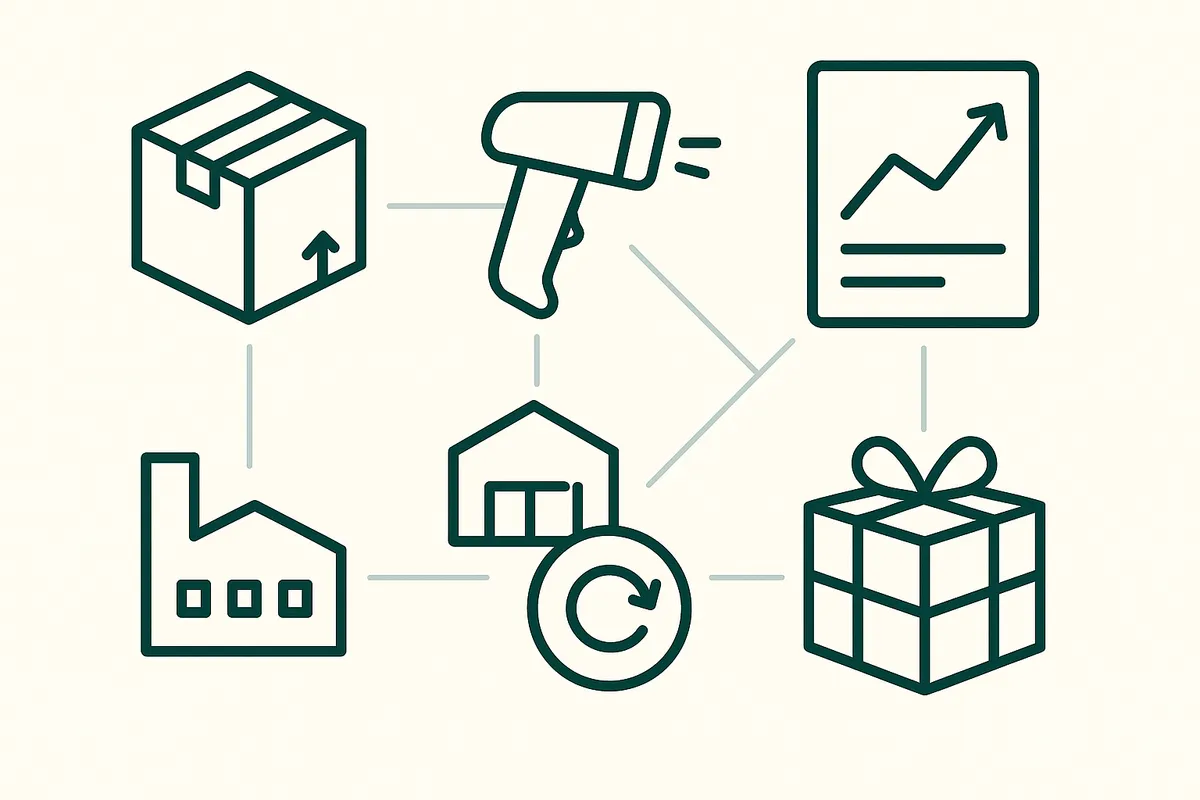
What does Canopy do?
Canopy is a Shopify-native inventory management platform that tracks live stock levels, forecasts weeks of cover for every SKU, manages purchase orders end to end, and gives you a real-time P&L dashboard — all from a single clean interface. It connects directly to your Shopify store via the official API and syncs stock levels in both directions in real time. Brands like Bailey & Coco use Canopy to manage 2,845 SKUs across 190-day combined lead times from China — without spreadsheets.
12 features. One inventory system.
Built specifically for Shopify brands that source from overseas suppliers.
Live Stock Levels
See exactly how much of every SKU you have on hand, in transit and committed to open orders — updated in real time as Shopify sales come in. No more end-of-day reconciliation or manual spreadsheet updates. Canopy keeps your numbers accurate whether you have 50 SKUs or 5,000.
Weeks Cover Forecasting
Canopy calculates weeks of cover for every SKU automatically — dividing current stock by your rolling average daily sales rate. When a product drops below your minimum weeks cover threshold, you get an alert before you run out. Brands like Bailey & Coco use weeks cover to manage 2,845 SKUs with 190-day combined lead times from China.
Purchase Order Management
Create, send, track and receive purchase orders without leaving Canopy. Every PO is tied to your stock levels so goods-in automatically updates your available inventory. Full audit trail of what was ordered, what arrived and what was disputed — so you never lose track of a shipment again.
Phone Barcode Scanning
Turn any smartphone into a warehouse scanner — no dedicated hardware required. Scan items on goods-in to receive against a PO, run guided stocktakes aisle by aisle, or scan pick lists to confirm dispatch. Works with any standard barcode or QR code printed on your products.
Supplier Portal
Share a secure web portal with your overseas supplier — no login account needed on their side. Your supplier opens your PO, fills in quantities and uploads their packing list directly into Canopy. This eliminates the back-and-forth spreadsheet exchange that costs brands hours per shipment and introduces costly data entry errors.
Real-Time P&L Dashboard
See gross margin per SKU, per channel and across your whole business — updated every time a Shopify order comes in. Canopy pulls in your product costs, landed costs and ad spend to give you contribution margin, not just revenue. Know which SKUs are actually making you money before you reorder them.
AI Reorder Intelligence
Canopy's AI analyses your historical sales velocity, seasonality patterns and confirmed supplier lead times to calculate the optimal reorder quantity and date for every SKU. It accounts for your weeks cover minimums, freight schedules and cash flow — so you order the right amount at the right time, not too early and not too late.
Bundle & Kitting Engine
Sell product bundles on Shopify without losing track of component stock. Define any combination of SKUs as a bundle and Canopy automatically decrements each component when the bundle sells. Works with variable bundles, gift sets and kits — with full visibility of how many complete bundles you can still build from available components.
Landed Cost Calculator
Import duty, sea freight, insurance, port charges and 3PL handling all eat into your margin — but most brands guess at these numbers. Canopy's landed cost calculator allocates every cost to individual SKUs based on weight, volume or value, so your P&L shows true margin rather than wishful thinking.
Multi-Location Inventory
Track stock across your main warehouse, 3PLs, retail locations, pop-ups and in-transit shipments from a single dashboard. Transfer stock between locations with a full movement log, and see aggregated or per-location stock levels at a glance. Works seamlessly with Shopify's multi-location inventory API.
Goods-In / Goods-Out
Receive shipments against purchase orders with a step-by-step goods-in flow that flags any discrepancies between what was ordered and what arrived. Canopy's 5-layer error prevention catches quantity mismatches, unexpected SKUs and missing barcodes before they corrupt your stock counts. Record outbound movements for returns, samples and transfers with the same accuracy.
Shopify Sync
Canopy connects directly to your Shopify store via the official API — no middleware, no delays. Stock levels update in both directions in real time: Shopify orders decrement Canopy stock instantly, and goods-in receipts push updated quantities back to Shopify automatically. Supports multiple Shopify stores on Scale plan.
Built for real businesses
Case study
Bailey & Coco
Bailey & Coco sell premium dog accessories on Shopify — 2,845 SKUs across 152 pattern variations, manufactured in China with a combined lead time of 190 days (70 days production, 120 days sea freight). Before Canopy, they managed reordering on a spreadsheet that took two days a week to maintain and still produced stockouts on bestsellers.
With Canopy, weeks cover forecasting runs automatically for every SKU. When any variant drops below the minimum threshold, the team gets an alert before it becomes a problem. Purchase orders are raised in Canopy, the supplier fills in the packing list via the portal, and goods-in is scanned on arrival. The whole process that took two days a week now takes two hours.
Ready to replace spreadsheets with real inventory intelligence?
Join the Canopy waitlist and be first to access the inventory system built for Shopify brands.
Features FAQ
Weeks cover tells you how many weeks of stock you have left at your current sales rate — for every SKU individually. It's a more useful number than raw stock quantity because it accounts for how fast you're actually selling. For a brand like Bailey & Coco with 190-day combined lead times from China (70 days production plus 120 days sea freight), knowing you have 8 weeks of cover versus 28 weeks changes whether you need to place a new order today or next month.
Yes — Canopy uses your smartphone camera as a barcode scanner, so you don't need to buy dedicated scanning hardware. Use it to receive goods against purchase orders, run stocktakes aisle by aisle, and confirm pick-and-pack. Works with any standard barcode format including EAN-13, UPC-A, QR codes and Code 128.
Yes — Canopy's P&L dashboard shows gross margin per SKU, per sales channel and across your whole business in real time. It factors in your product cost prices, landed costs (freight, duty, insurance) and — on Grow and Scale plans — your Meta Ads and Google Ads spend. This gives you true contribution margin per product, not just revenue, so you know which SKUs are actually worth reordering.
When you raise a purchase order in Canopy, you can share a secure link with your overseas supplier. They open the link (no login required), see the PO in their language if needed, fill in the quantities they're shipping and upload their packing list. Canopy then validates the packing list against the PO using 5-layer error prevention — flagging quantity mismatches, wrong SKUs and missing barcodes before they hit your warehouse. This replaces the email-and-spreadsheet process most brands use, saving hours per shipment.
Canopy's AI analyses your daily sales velocity for each SKU over configurable rolling windows, identifies seasonal patterns, and combines this with your confirmed supplier lead times to calculate the optimal reorder date and quantity. It accounts for your weeks cover minimums, outstanding PO stock and typical freight schedules. The result is a prioritised reorder list updated daily — not a static reorder point you set once and forget.
Yes. Define any combination of SKUs as a bundle in Canopy and when that bundle sells on Shopify, Canopy automatically decrements the correct quantity of each component SKU. You can see how many complete bundles you can still build from available components, and bundles are included in weeks cover calculations. Works with fixed bundles, variable bundles and seasonal gift sets.
Yes — available on Grow and Scale plans. When you receive a shipment, enter the total freight, duty, insurance and handling costs and Canopy allocates them to individual SKUs based on weight, volume or value (your choice). This gives you an accurate landed cost per unit which flows directly into your P&L dashboard, so your margin numbers reflect what you actually paid to get the product to your warehouse.
Yes — Grow and Scale plans support multiple stock locations including your own warehouses, third-party logistics providers and retail locations. You can receive purchase orders into any location, transfer stock between locations with a full movement log, and view per-location or aggregated stock levels. Multi-location data syncs with Shopify's native multi-location inventory API.
Yes — Canopy has a guided stocktake workflow available on all plans. Use your phone's barcode scanner to count items aisle by aisle, and Canopy presents the expected count alongside your live stock level so discrepancies are visible immediately. Once you confirm the count, Canopy updates stock levels and creates a variance report. Stocktakes can be run for your full inventory or a specific location or product range.
Yes — when you raise a purchase order and it ships, you can mark the PO as in transit with an estimated arrival date. Canopy tracks in-transit stock separately from on-hand stock, and your weeks cover calculations can optionally include in-transit stock in the available total. This is particularly important for brands with long sea freight lead times where stock that's on the water is a significant portion of their total inventory position.
When a supplier submits a packing list via the supplier portal, Canopy runs 5 automated checks before the data enters your stock: (1) SKU validation — every item must match a known SKU in your catalogue, (2) quantity verification — shipped quantities are compared against PO quantities and flagged if over or under, (3) barcode check — items without valid barcodes are flagged, (4) duplicate line detection — duplicate entries from supplier data entry errors are caught, and (5) unit-of-measure validation — ensures quantities are in the expected units. Errors require manual review before stock is updated.
“I built an £80M+ ecommerce business and spent £200,000 on OrderWise stock software I never learned to use. So I built Canopy.”
Andrew Simpson, Founder
Start managing inventory like a serious brand
Join the Canopy waitlist — built for Shopify, designed for clarity.