Scaling from £100K to £1M: The Operational Playbook
By Canopy Team

Quick answer
Scaling from £100K to £1M in annual revenue requires fundamentally different operations. At £100K, the founder does everything and spreadsheets work. At £1M, you need systems and at least 2-3 team members, or you become the bottleneck. The three biggest operational challenges are: inventory management (ordering the right stock at the right time becomes impossible manually above 300 SKUs), fulfilment (packing orders personally stops working above 30 orders per day), and cash flow management (inventory investment at £1M needs 3-4x the working capital). Automate before you hire where possible — tools are cheaper than salaries.
The operational gap between £100K and £1M
At £100K annual revenue, your ecommerce operation is intimate. You know every product personally. You can mentally track which items are selling well. You pack orders yourself, often from a spare room or small storage unit. The entire business runs on your knowledge, your memory, and a few spreadsheets. This works because the volume is manageable.
At £1M — ten times the revenue — everything that worked at £100K breaks. You cannot mentally track 500+ SKUs. You cannot pack 100+ orders per day personally. You cannot remember when you last reordered from each supplier. The skills that built the business to £100K are not the skills that scale it to £1M. The founder's role has to shift from doing everything to designing systems that enable others (and software) to do it.
The brands that get stuck between £300K and £700K are almost always stuck for operational reasons, not demand reasons. They have the customers. They have the product. They do not have the systems to fulfil efficiently at the higher volume.

Inventory: the silent bottleneck
Inventory management is the operational challenge that kills the most promising ecommerce brands during scaling. At £100K, you can get away with reactive ordering — you notice a product is running low and reorder it. At £1M, reactive ordering guarantees stockouts on your bestsellers and overstock on your slow movers.
The maths is brutal. At £100K with 100 SKUs and a 14-day UK supplier lead time, you need to make roughly 100 reorder decisions per month. Manageable. At £1M with 500 SKUs and some products sourced from China with 190-day lead times, you need to make 500+ reorder decisions per month — and many of those decisions need to be made 6 months in advance. No founder can make 500 accurate purchasing decisions per month while also managing marketing, customer service, product development, and the other 15 responsibilities they hold.
This is where inventory management software stops being optional and starts being survival. The cost of the software (£100-300/month) is trivial compared to the cost of one bad purchasing cycle — a single stockout on your top 5 products during peak season can cost £10,000-50,000 in lost sales.
When to automate vs when to hire
The instinct at the scaling stage is to hire. You feel overwhelmed, so you think "I need help." But hiring before you have systems is expensive and often counterproductive — you end up paying someone £25,000-35,000/year to do manually what software could do for £100-300/month.
The rule of thumb: automate the process first, then hire someone to manage the automation. Here is the priority sequence for most ecommerce brands scaling through the £100K-£1M range:
- Inventory management software (£100-300/month) — replaces manual spreadsheet tracking and prevents stockouts. ROI: immediate. This is your first investment.
- Shipping automation (Shipstation, Veeqo — £50-200/month) — automates label printing, carrier selection, and tracking updates. Saves 1-2 hours per day at 50+ orders.
- Email marketing automation (Klaviyo — £50-500/month) — post-purchase flows, abandoned cart recovery, back-in-stock notifications. Generates revenue while you sleep.
- Accounting integration (Xero/QuickBooks + A2X — £30-100/month) — automates Shopify-to-accounting reconciliation. Saves 4-8 hours per month of manual bookkeeping.
- First hire: warehouse/fulfilment assistant (£22,000-28,000/year) — handles picking, packing, and shipping. This is the first role that cannot be automated away.
- Second hire: operations manager (£30,000-40,000/year) — manages inventory decisions, supplier relationships, and warehouse operations. Only justified above £500K revenue.

How Bailey & Coco scaled their operations
Bailey & Coco's scaling journey is instructive. At £150K revenue, the founder managed everything: product design, marketing, order packing, customer service, and inventory (via a Google Sheet). The Google Sheet broke first. With 400 SKUs and growing, it took 3 hours per week just to update stock levels and decide what to reorder. And the decisions were increasingly wrong — two stockouts on bestsellers in Q4 cost an estimated £12,000 in lost sales.
Their scaling sequence: at £200K, they invested in inventory management software. Reorder decisions went from 3 hours per week to 30 minutes. At £300K, they hired a part-time warehouse assistant (16 hours/week) to handle packing — this freed the founder to focus on marketing and product development, which drove the next growth phase. At £500K, the warehouse assistant went full-time and they added shipping automation. At £700K, they hired an operations manager who took over inventory decisions, supplier management, and warehouse operations entirely.
The key insight: the software investments always preceded the hiring decisions. Software gave them the systems. People then operated within those systems. Hiring without systems would have meant paying someone to do the same manual, error-prone work the founder was doing — just with less context and knowledge.
The inventory system that scales with you
Canopy gives Shopify brands the inventory clarity they need to grow.
Cash flow: the constraint nobody warns you about
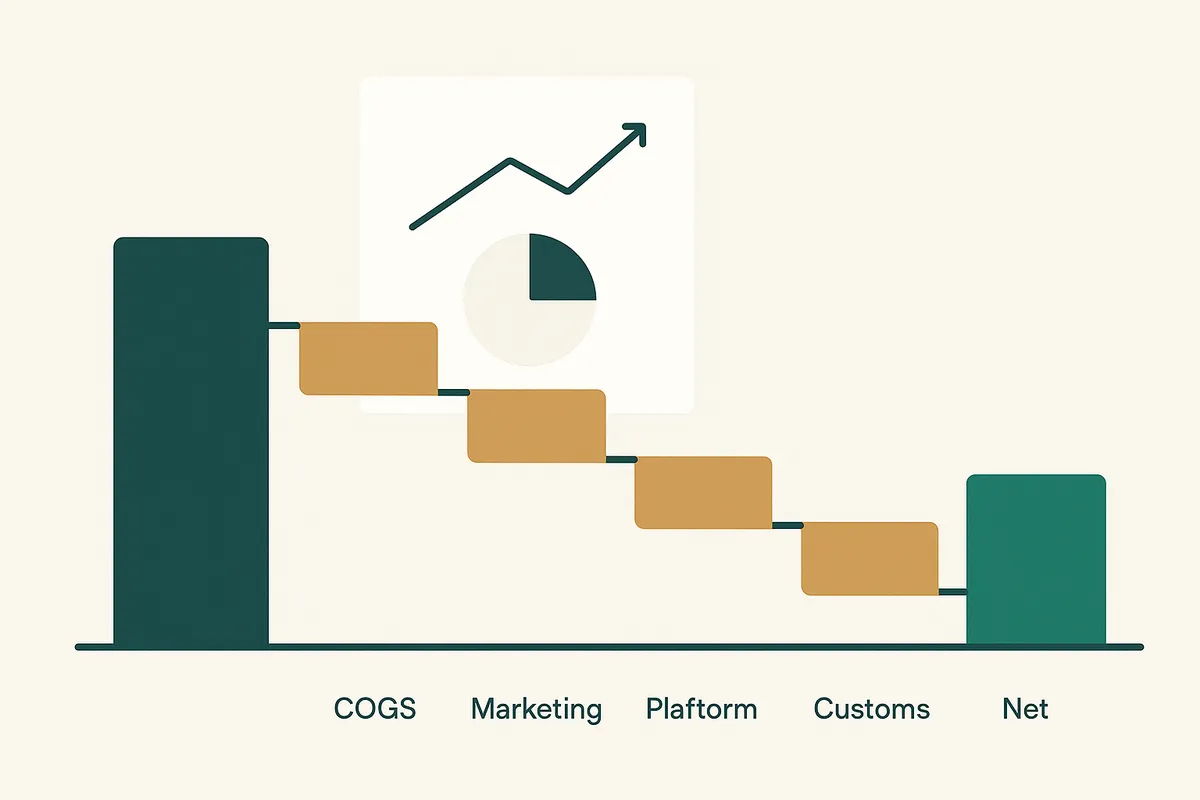
Scaling revenue 10x requires scaling inventory investment roughly 3-4x (not 10x, because faster inventory turns at higher volume provide some leverage). But the cash has to come from somewhere. At £100K revenue with 40% gross margins, you might have £20,000 tied up in inventory. At £1M, that number climbs to £60,000-£80,000 — plus you need to place larger orders further in advance, which means cash leaves your account months before it returns as revenue.
Brands sourcing from China face the most extreme version of this: a purchase order placed today will not generate revenue for 190+ days. If you place a £40,000 order in May for Christmas stock, that cash is gone until November. Meanwhile, you still need to fund daily operations, marketing spend, and potentially another order before the first one even arrives.
Solutions: invoice financing against confirmed POs, revenue-based lending (Clearco, Wayflyer), or careful cash flow modelling that ensures you never have more than 60% of available capital locked in inventory at any time. The last option is free and should be your first step.
The £1M tech stack
Here is the software stack that most £1M Shopify brands converge on:
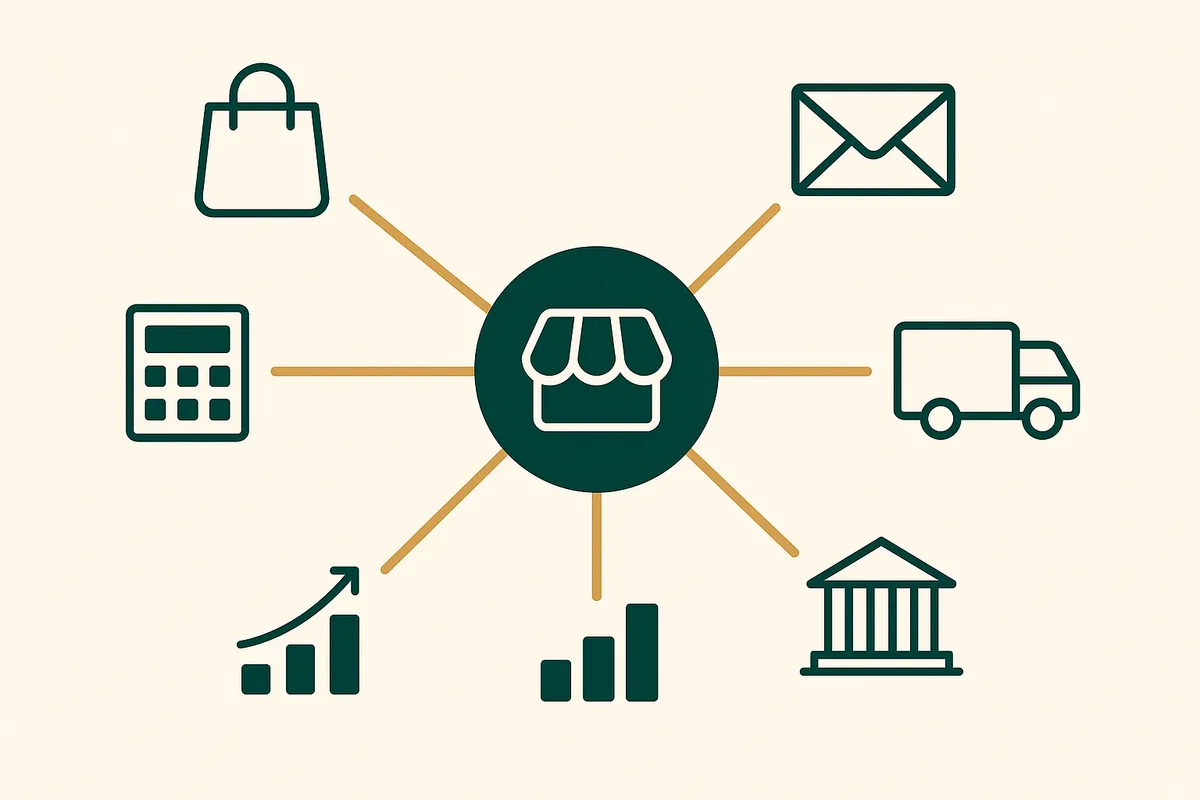
Shopify (£79-299/month) for the storefront and order management. An inventory management tool like Canopy (TBC) for stock visibility, purchasing, and forecasting. Xero or QuickBooks (£30-50/month) for accounting. Klaviyo (£50-500/month) for email and SMS marketing. A shipping platform — Veeqo is free for Shopify brands and handles multi-carrier label printing. Google Workspace or equivalent (£5-12/user/month) for business operations.
Total: roughly £250-800/month depending on plan levels. This stack supports £1M+ in revenue and replaces what would otherwise require 1-2 additional staff members. At an average fully-loaded employee cost of £30,000-40,000/year, the software ROI is significant.
The brands that struggle at the scaling stage often have either too few tools (trying to manage everything in spreadsheets) or too many (10+ apps that do not talk to each other, creating data silos and reconciliation nightmares). The sweet spot is 5-7 core tools that integrate cleanly.
Frequently Asked Questions
When you have more than 200 SKUs or when updating your inventory spreadsheet takes more than 2 hours per week. For most brands, this happens between £100K-£200K annual revenue. The software cost (£100-300/month) is trivial compared to the cost of stockouts.
Automate first, then hire. Software handles repetitive tasks at £100-300/month that would cost £25,000-35,000/year in salary. Hire when the task requires judgment, physical presence, or creativity that software cannot provide.
Plan for £60,000-£100,000 in inventory investment at any time, depending on your margins, lead times, and supplier payment terms. Brands with long lead times (China sourcing) need proportionally more working capital.
Hiring before building systems. If you hire someone to manage inventory manually, they will make the same errors you were making — just with less business context. Build the systems (software, processes, SOPs) first, then hire people to operate within them.
Typically between £500K-£700K annual revenue, when inventory decisions, supplier management, and warehouse operations collectively consume more than 20 hours per week of the founder's time. Below that, software and a warehouse assistant usually suffice.
Related pages
Related Articles
Shopify Inventory Management in 2026: What's Built In, What's Missing & What You Actually Need
Shopify's native inventory features have improved, but critical gaps remain. This guide covers what Shopify can and can't do for inventory management, the best apps to fill the gaps, and how to build a system that scales.
Weeks Cover in Stock Management: Formula, Examples & How to Use It
Weeks cover tells you how many weeks your current stock will last at the current sales rate. Learn the formula, what good weeks cover looks like, and how to calculate it for thousands of SKUs.
Get early access to Canopy
The inventory system built for Shopify brands. No spam — just a heads-up when we launch.