Overstock Management: How to Stop Tying Up Cash in Excess Inventory
By Canopy Team
Quick answer
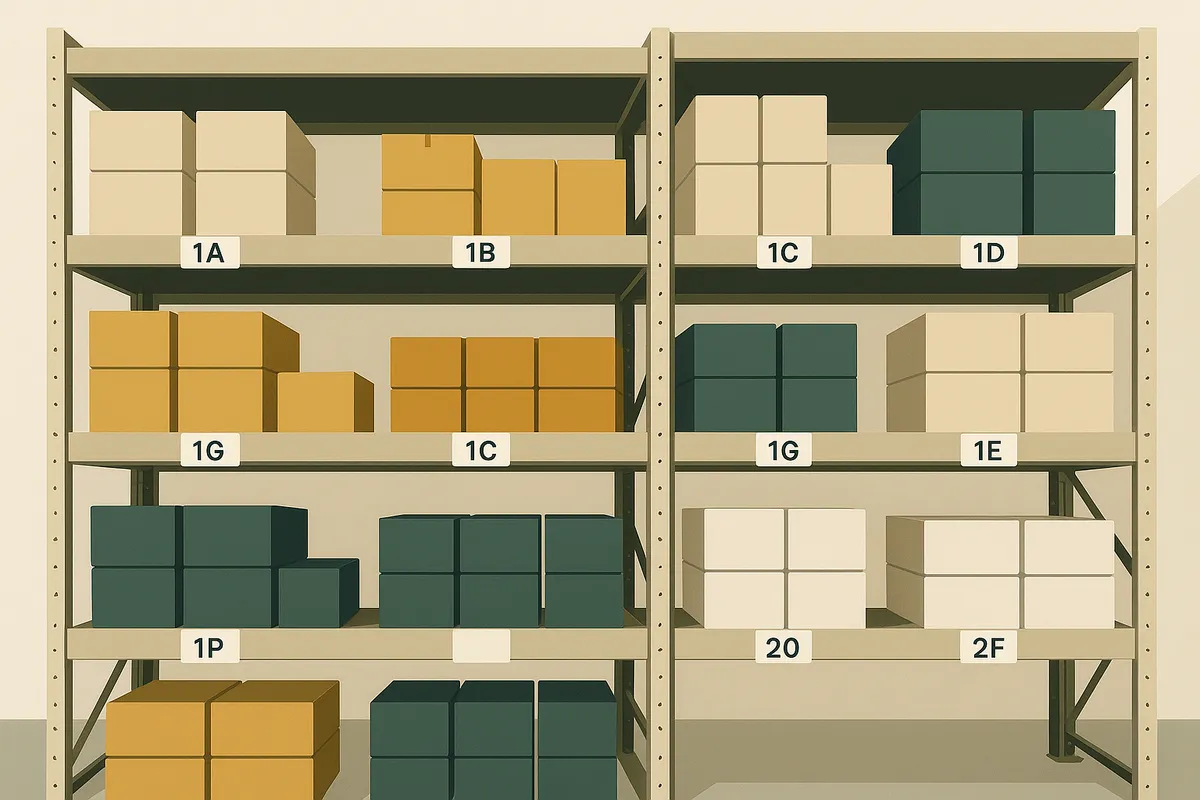
Overstock occurs when you hold more inventory than you can sell within a reasonable timeframe — typically more than 16-20 weeks cover. It traps cash, increases warehousing costs, and creates a compounding problem: the money locked in excess stock is money you cannot spend on fast-moving products that actually generate revenue. Prevention requires accurate demand forecasting and disciplined purchasing. Once overstock exists, your options are discounting, bundling, B2B liquidation, or donation — each with different margin and speed trade-offs.
How overstock happens — it is rarely one big mistake
Overstock rarely comes from a single bad purchasing decision. It accumulates gradually through a combination of small optimistic choices. You order 20% extra because you got a better per-unit price at the higher MOQ. You bring in a new colourway because the supplier showed you a nice sample. You order based on last Q4's sales without accounting for the fact that you ran a 30% off promotion that inflated the numbers. Each decision seems reasonable in isolation. But across 150+ SKUs and 6-8 ordering cycles per year, these small optimistic biases compound into a significant overstock position. The average ecommerce brand carries 25-35% more inventory than it needs at any given time. For a brand turning over £500K annually with 30% COGS, that is £37,500-£52,500 in excess stock sitting in the warehouse.
The cash flow trap most founders do not see coming
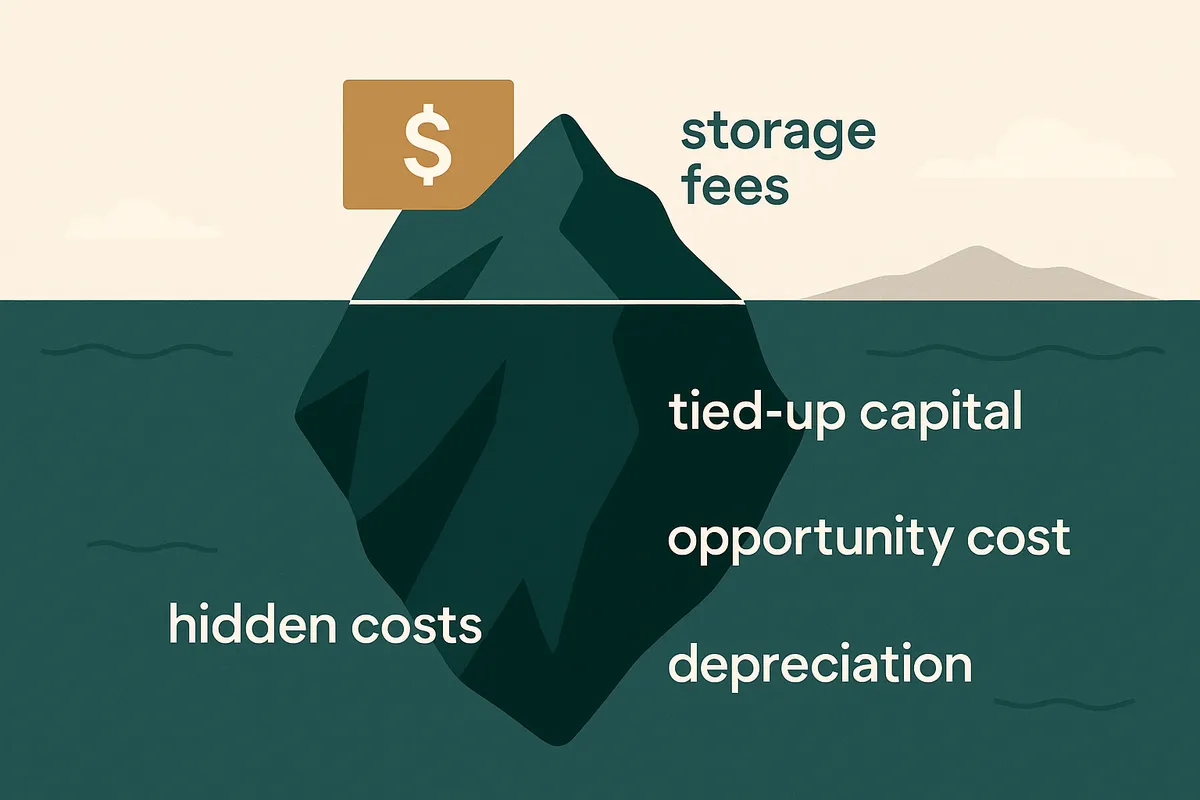
The most dangerous aspect of overstock is invisible: opportunity cost. Every pound locked in excess inventory is a pound you cannot use for marketing, new product development, or — critically — purchasing stock for products that are actually selling well. This creates a vicious cycle. You are overstocked on slow movers, so your cash is tied up. Your fast movers start running low, but you cannot afford to reorder because your capital is locked in the slow stock. Your fast movers stockout. Revenue drops. Now you have even less cash to address the problem. Meanwhile, the slow-moving stock is depreciating — either literally (seasonal products losing relevance) or through storage costs eating into already-thin margins. Warehousing in the UK costs £5-15 per pallet per week. If you have 10 pallets of overstock, that is £50-150 per week in pure holding cost on products that are not generating revenue.
How Bailey & Coco identified their overstock problem
Bailey & Coco discovered their overstock problem when they analysed their weeks cover across all 2,845 SKUs. The results were stark: 340 SKUs (12% of their catalogue) had over 52 weeks cover — more than a year's supply at current sell-through rates. These SKUs represented £23,000 in tied-up capital. The worst offenders were seasonal products ordered at the wrong time: summer cooling bandanas ordered in bulk in April that arrived in August (after peak demand had passed), and limited-edition Christmas collar patterns from 2024 that sold well that year but had been reordered in 2025 on the assumption that demand would repeat. It did not — customers wanted the new 2025 patterns instead.
The overstock also included products where the minimum order quantity from their China supplier exceeded realistic demand. Their supplier required a minimum of 500 units per colourway. For niche patterns that sell 200 units per year, that meant 2.5 years of stock from a single order. The per-unit cost saving from hitting the MOQ was dwarfed by the carrying cost of 18 months of excess inventory.
Spot overstock before it traps your cash
Canopy gives Shopify brands the inventory clarity they need to grow.
Prevention strategies that actually work
- Set maximum weeks cover thresholds per SKU category — never order above 16 weeks cover unless you have a specific, documented reason (upcoming promotion, seasonal pre-build).
- Use demand forecasting based on the last 90 days of sales, not annual averages. Annual averages hide seasonal patterns that cause over-ordering.
- Challenge supplier MOQs — many suppliers will negotiate lower minimums for repeat customers or if you commit to regular ordering schedules.
- Separate "base" orders from "promotional" orders. Order your baseline demand on regular cycles. Only order promotional uplift when the promotion is confirmed.
- Review weeks cover weekly, not monthly. Monthly reviews let overstock accumulate for 4 weeks before you notice it.
- Build in a "safety check" before every PO: does this order push any SKU above 16 weeks cover? If yes, reduce the quantity or split the order.

Liquidation options when overstock already exists
If you already have overstock, the goal is to convert it back to cash as quickly as possible, even at a margin loss. The longer you hold it, the less it is worth.
Progressive discounting: Start at 20% off, move to 40% after 30 days, 60% after 60 days. This captures price-sensitive customers at each tier while maximising your recovery on units sold early.
Bundle with fast movers: Pair overstock items with popular products as a "bonus item" or "starter kit." This adds perceived value to the bundle while clearing dead inventory without visible discounting.
B2B liquidation: Companies like Zoro and B-Stock specialise in buying excess ecommerce inventory at 10-30% of retail price. The margin is painful but the cash recovery is immediate.
Donation with tax benefit: Donating excess stock to registered charities provides a tax deduction on the cost value of the goods. For products with no resale path, this is often the most economically rational option.
Marketplace channels: List overstock on Amazon, eBay, or TK Maxx Marketplace at discounted prices. Different customer base, different price expectations, and it keeps discounting off your main brand site.
How Canopy prevents overstock before it happens
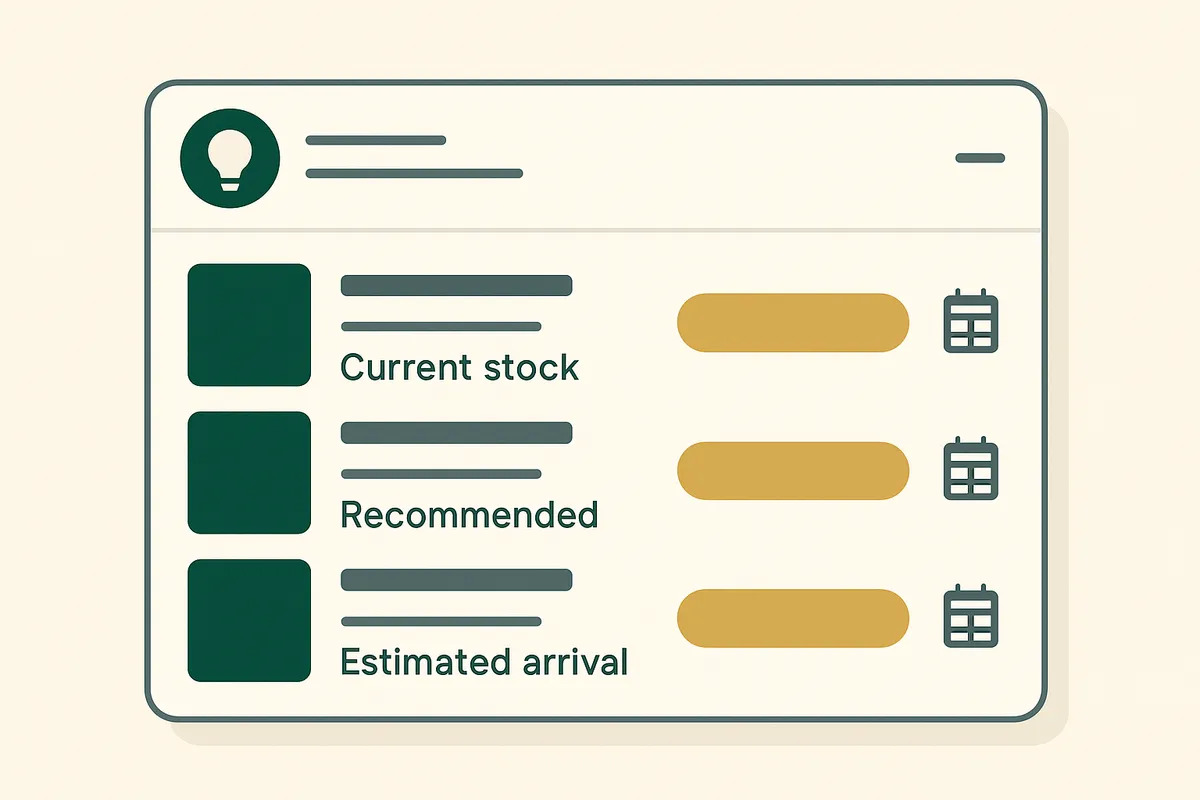
Canopy's weeks cover dashboard makes overstock visible before it becomes a problem. Every SKU is colour-coded: red for critically low stock, green for healthy levels, and amber for approaching overstock territory. When you create a purchase order, Canopy shows you exactly where the new stock will take your weeks cover — before you submit the order. If adding 500 units of a pattern would push it from 10 weeks to 35 weeks cover, you see that warning before the order goes to your supplier. This pre-order visibility is the single most effective overstock prevention tool. Most overstock happens because founders did not have this information at the moment they were making the purchasing decision. They had it in a spreadsheet somewhere, or they could calculate it if they spent 30 minutes pulling reports, but not at the point of decision. Canopy puts it in front of you when it matters.
Frequently Asked Questions
Any SKU with more than 16-20 weeks cover at current sell-through rates is generally considered overstocked. Above 52 weeks cover, it is effectively dead stock — you have more than a year's supply.
The direct cost is warehousing (£5-15 per pallet per week in the UK) plus the opportunity cost of tied-up capital. The average ecommerce brand carries 25-35% more inventory than needed, which for a £500K/year brand means £37,500-£52,500 in excess stock.
Progressive discounting works but can train customers to wait for sales. Consider using separate channels (Amazon, eBay) for liquidation, or bundle overstock with popular items to clear it without visible discounting on your brand site.
Offer a committed ordering schedule (e.g., monthly orders vs sporadic large orders), accept a slightly higher per-unit price for lower MOQs, or consolidate multiple colourways into a single production run to hit the supplier's total piece count.
Overstock is inventory that exceeds your near-term needs but will eventually sell. Dead stock is inventory with no realistic prospect of selling at any price — typically discontinued items, expired products, or severely out-of-season goods.
Related pages
Related Articles

Dead Stock in Ecommerce: How to Identify, Calculate Cost & Eliminate It
Dead stock costs the average Shopify merchant 20-30% of their inventory value. Learn how to identify dead stock, calculate the true carrying cost, and build clearance strategies that recover cash.
Dead Stock Clearance: 8 Strategies to Recover Cash from Unsold Shopify Inventory
Sitting on dead stock that won't sell? These 8 clearance strategies — from flash sales to B2B liquidation — help Shopify brands recover cash and free up warehouse space.

Weeks Cover in Stock Management: Formula, Examples & How to Use It
Weeks cover tells you how many weeks your current stock will last at the current sales rate. Learn the formula, what good weeks cover looks like, and how to calculate it for thousands of SKUs.
Get early access to Canopy
The inventory system built for Shopify brands. No spam — just a heads-up when we launch.