How Much Are Stockouts Actually Costing Your Shopify Store?
By Canopy Team
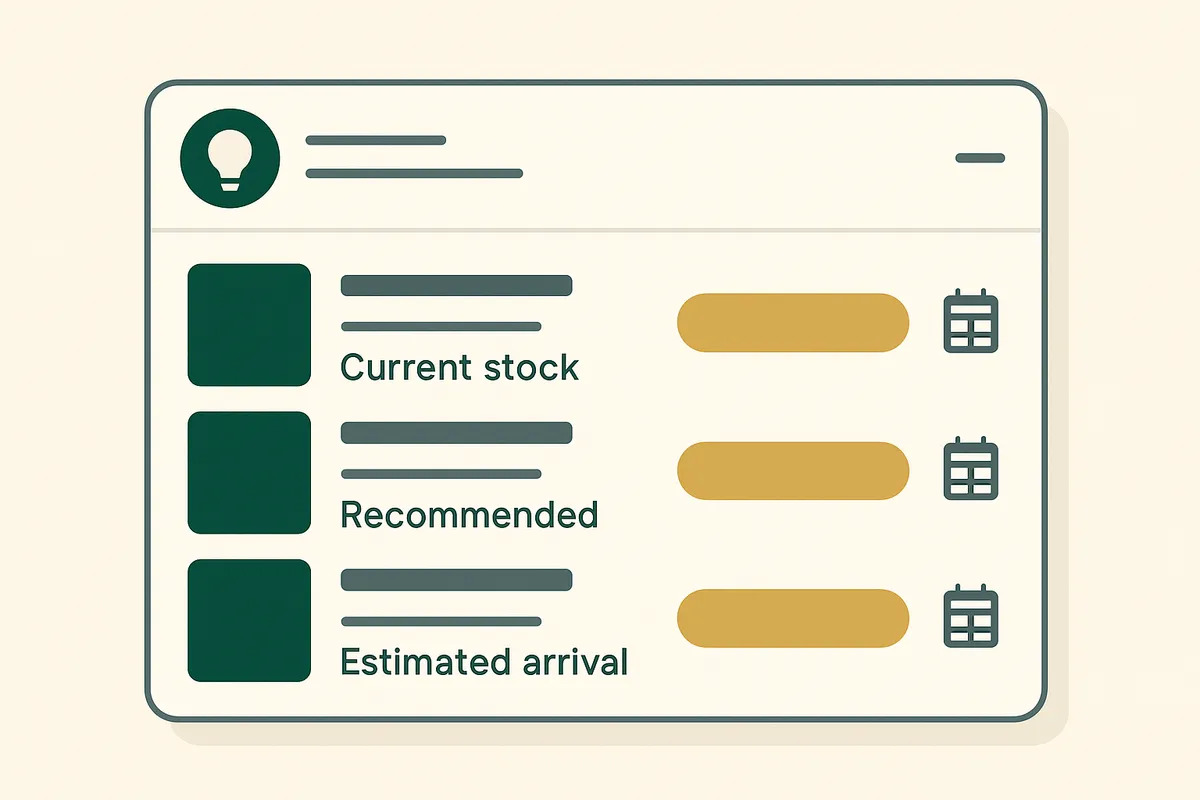
Quick answer
The true cost of a stockout is 2-3x the direct lost sales revenue. A product that generates £500/week in revenue does not just cost you £500 per week it is out of stock — it costs you the lost customers who will not return (estimated at 30-40% of visitors), the SEO ranking decline from reduced engagement signals, the Google Shopping/PPC waste from ads running to out-of-stock pages, and the competitor revenue gain. For a typical Shopify brand, a single stockout on a best-selling product lasting 4 weeks can cost £6,000-10,000 in total impact against just £2,000 in visible lost sales.
Why merchants massively underestimate stockout costs
When a product goes out of stock, most merchants calculate the cost as: units normally sold per week multiplied by selling price multiplied by weeks out of stock. That gives you the direct revenue loss. But it dramatically underestimates the real damage because it ignores five hidden costs that compound over time. A stockout is not just a missed sale — it is a cascade of negative consequences that affect your business for weeks after the product returns to stock. Understanding these hidden costs changes how urgently you treat inventory management. Once you see the full picture, the ROI of preventing stockouts through proper weeks cover monitoring becomes obvious.
Hidden cost 1: permanent customer loss
Research from Harvard Business Review shows that 21-43% of customers who encounter a stockout will buy from a competitor instead — and many will not return even after your product is back in stock. They have now discovered your competitor, bookmarked their site, and may have signed up for their email list.
For a product page that receives 200 visitors per week with a 3% conversion rate, an out-of-stock page means 6 customers per week who intended to buy but could not. If 30% of those (roughly 2 customers per week) permanently shift to a competitor, the ongoing revenue loss extends far beyond the stockout period. At an average order value of £40 and an average customer lifetime of 3 orders, each permanently lost customer costs £120 in future revenue.
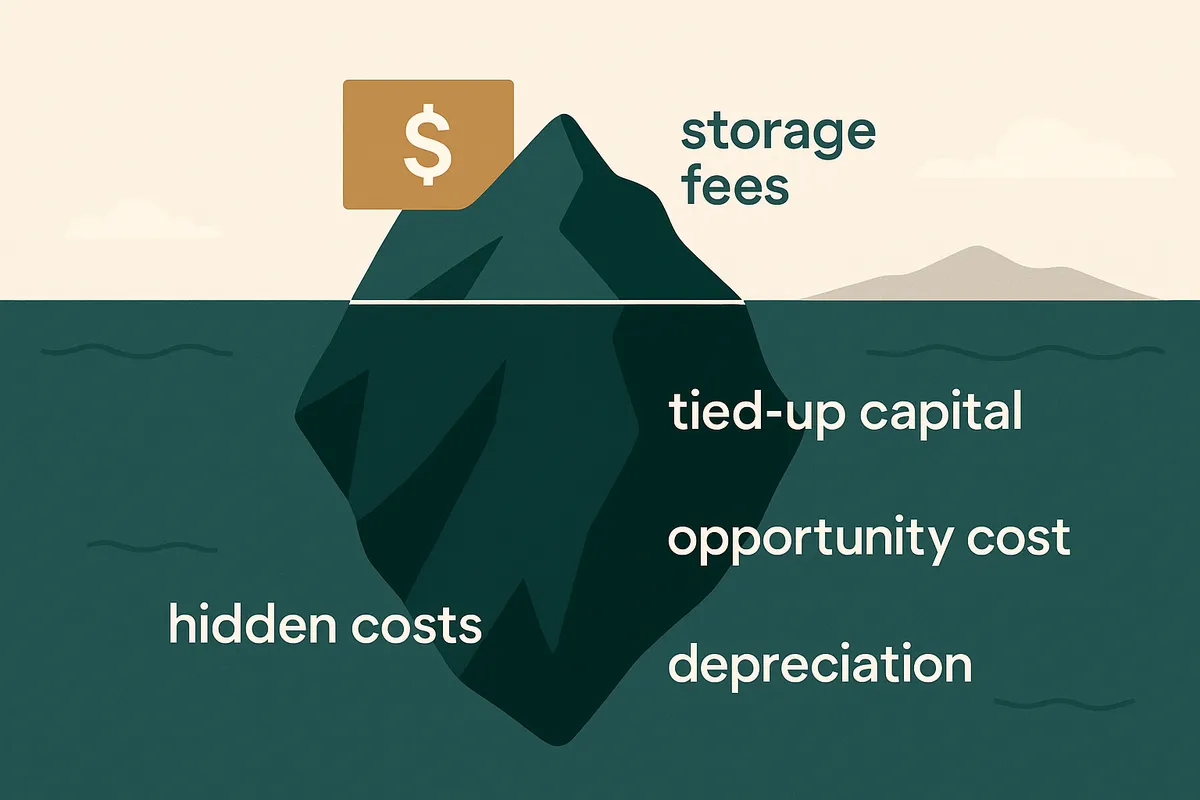
Hidden cost 2: SEO ranking decline
Google evaluates page quality based on user engagement signals — time on page, bounce rate, click-through rate. When a product is out of stock, visitor behaviour changes dramatically. Bounce rate spikes (visitors land, see "sold out," and leave), time on page drops, and engagement signals deteriorate. If your product page ranks on page one of Google for a valuable search term, extended stockouts can erode that ranking. Google does not know your product is temporarily unavailable — it just sees that visitors are increasingly dissatisfied with the page. A ranking drop from position 3 to position 8 for a search term with 1,000 monthly searches could reduce organic traffic by 60-70%. Recovering that ranking after restocking takes weeks to months.
Hidden cost 3: wasted advertising spend
If you are running Google Shopping campaigns or Meta ads pointing to product pages, those ads do not automatically pause when a product goes out of stock. You continue paying for clicks to a page where customers cannot buy. Google Shopping will eventually disapprove ads for out-of-stock products, but this can take 24-48 hours. Meta ads have no automatic stock-level integration. During that window, you are burning ad spend with zero conversion possibility.
At a cost of £0.50-1.50 per click and 50-200 daily clicks to a popular product, that is £25-300 per day in wasted ad spend during a stockout. For a 4-week stockout, wasted PPC could reach £700-8,400.
Hidden cost 4: competitor revenue transfer
Your stockout is your competitor's gain. The customer who could not buy from you does not simply stop wanting the product — they search for alternatives. Every customer lost to a competitor during your stockout is a customer gained by someone else. In niche markets like pet accessories, where customers are brand-loyal but product-loyal first, a stockout can introduce customers to competitors they did not know existed. Bailey & Coco competes with 15-20 other dog accessory brands on Shopify. When their best-selling Vintage Floral collar went out of stock for 3 weeks, they tracked competitor sales data and estimated that roughly £2,200 of "their" revenue shifted to three competing brands during that period.
Hidden cost 5: operational disruption
A stockout on a popular product disrupts more than just that product's sales. Customer service queries increase ("when will this be back in stock?"). Marketing campaigns planned around that product need to be revised. Bundle products containing the out-of-stock component also become unavailable. Staff time spent managing the stockout — updating product pages, responding to emails, revising ads, creating back-in-stock notifications — has a real cost that most merchants never quantify.
For Bailey & Coco, a stockout on any component product ripples through their 151 bundles. A single collar being out of stock can make 4-5 bundle products unavailable, multiplying the revenue impact far beyond the individual product.
Real scenario: Bailey & Coco's £8,200 stockout
In late 2025, Bailey & Coco's best-selling Classic Tartan collar went out of stock for 4 weeks due to a production delay in China. Here is the full cost breakdown:
Direct lost sales: Average 25 units/week at £18.95 = £1,895 over 4 weeks. Bundle impact: 3 bundles containing the collar also went unavailable = £1,240 in lost bundle sales. Lost customers (estimated 30% permanent): 8 customers at £120 lifetime value = £960. Wasted Google Shopping spend (2 days before ad paused): £185. SEO impact: Product dropped from position 4 to position 11 for "tartan dog collar" — estimated 6-week recovery period with £1,400 in reduced organic traffic value. Customer service time: 45 emails handled over 4 weeks = approximately £520 in staff cost.
Total visible cost (direct lost sales): £3,135 Total actual cost (including hidden costs): £8,200
The ratio was 2.6x — the real cost was nearly three times what appeared on the surface. This single stockout exceeded the annual cost of a proper inventory management system.
Prevent stockouts before they cost you thousands
Canopy gives Shopify brands the inventory clarity they need to grow.
How to calculate your own stockout cost
Use this framework to estimate the true cost of a stockout on any product:
Step 1 — Direct lost sales: Average weekly units x selling price x weeks out of stock.
Step 2 — Bundle impact: Identify all bundles containing the product. Calculate lost bundle revenue for the stockout period.
Step 3 — Customer loss: Estimate weekly product page visitors x conversion rate x 30% permanent loss rate x customer lifetime value.
Step 4 — Ad waste: Daily ad spend on that product x days until ads are paused.
Step 5 — SEO impact: Estimate organic traffic value to that page x weeks of reduced ranking after restock.
Step 6 — Operational cost: Customer service hours x hourly rate + marketing revision time.
Total stockout cost = Sum of all six components. For most Shopify brands, the total is 2-3x the direct lost sales figure.
Preventing stockouts with weeks cover monitoring
The most effective stockout prevention is monitoring weeks cover for every SKU and setting alerts when cover drops below your lead time threshold. This gives you maximum warning — you know a stockout is coming weeks or months before it happens, rather than discovering it when the last unit sells.
For brands with domestic suppliers (1-2 week lead times), alert when weeks cover drops below 4 weeks. For European imports (4-6 week lead times), alert at 8 weeks. For China imports (20-27 week lead times), alert at 30 weeks.
Canopy calculates weeks cover automatically for every SKU and sends alerts when products cross your defined thresholds. The goal is simple: never be surprised by a stockout again.

Frequently Asked Questions
The true cost of a stockout is typically 2-3x the direct lost revenue. A product generating £500/week that is out of stock for 4 weeks costs approximately £2,000 in direct lost sales but £5,000-6,000 including lost customers, SEO impact, wasted ad spend, and operational disruption.
Research suggests 21-43% of customers who encounter a stockout will buy from a competitor. Of those, approximately 30% will not return even after the product is restocked, resulting in permanent customer loss with lifetime revenue implications.
Yes. Extended stockouts cause increased bounce rates and decreased engagement on product pages, which sends negative signals to Google. A product ranking on page one can drop to page two during a prolonged stockout, with recovery taking weeks to months after restocking.
Calculate average daily units sold x selling price x days out of stock for direct losses. Then add: bundle product impact, estimated permanent customer loss x lifetime value, wasted ad spend during stockout, and customer service costs. The total is typically 2-3x the direct figure.
Monitor weeks cover for every SKU and set reorder alerts when cover drops below your supplier lead time plus a safety buffer. This gives you maximum warning before a stockout occurs. Canopy calculates weeks cover automatically and sends alerts when products approach critical levels.
Related pages
Related Articles
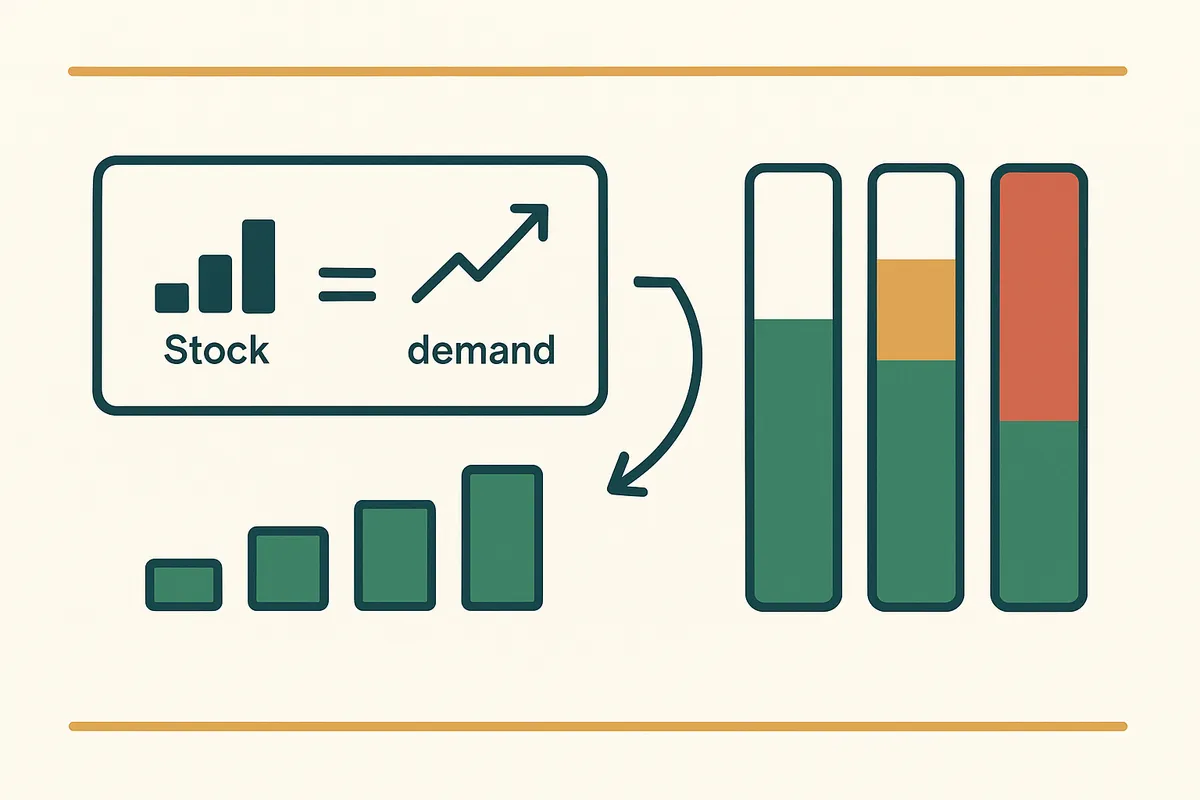
How to Calculate Weeks Cover for Shopify: Formula, Examples & Free Calculator
Learn how to calculate weeks cover for your Shopify store with the exact formula, worked examples using real data from a 2,845 SKU brand, and a free inventory calculator tool.
Safety Stock Formula for Ecommerce: The Calculation That Prevents Stockouts
The safety stock formula is Z x σd x √LT — but what does that actually mean? A plain-English breakdown with worked examples for ecommerce brands, including how to calculate safety stock when your lead time is 190 days.

Dead Stock Clearance: 8 Strategies to Recover Cash from Unsold Shopify Inventory
Sitting on dead stock that won't sell? These 8 clearance strategies — from flash sales to B2B liquidation — help Shopify brands recover cash and free up warehouse space.
Get early access to Canopy
The inventory system built for Shopify brands. No spam — just a heads-up when we launch.