Shopify Bundle Inventory Management: The Complete Guide
By Canopy Team
Quick answer
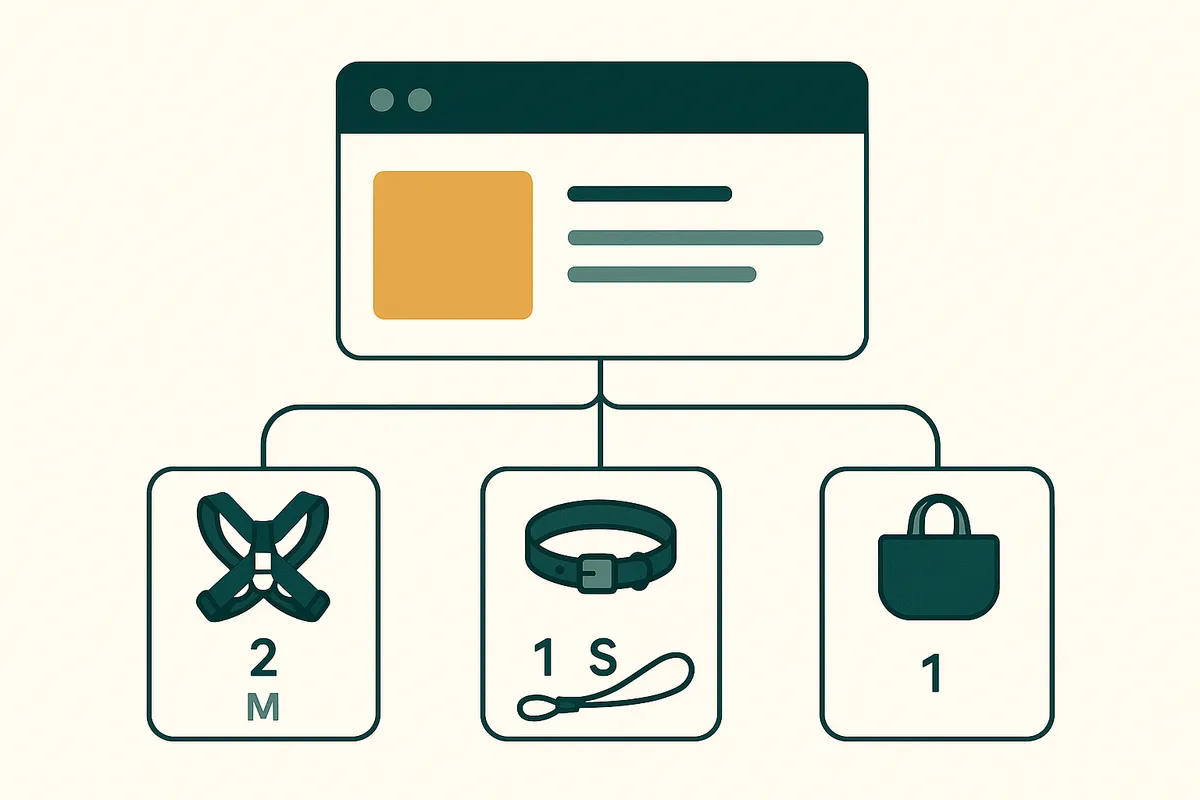
Bundle inventory management on Shopify requires tracking component stock levels and calculating available bundle quantities using the MIN(components) formula — your bundle availability equals the component with the lowest stock. Shopify does not handle this natively. If you sell a collar-and-lead set bundle, and you have 50 collars but only 12 leads, you can only sell 12 bundles regardless of how many collars you have. Bailey & Coco manages 151 bundle products with 2,384 variants — getting this wrong means overselling or leaving money on the table.
Why bundles break Shopify's inventory system
Shopify treats every product as an independent inventory item. When you sell a single product, Shopify decrements the stock by one. Simple. But a bundle is not a single product — it is a combination of components that each have their own independent stock levels. Shopify has no native concept of component relationships. When a customer buys a "collar and lead set" bundle, Shopify can decrement the bundle's stock by one, but it does not know that it also needs to decrement one collar and one lead from the component inventory. This creates two problems. First, the bundle stock shown to customers may be wrong — you might show 50 bundles available when you only have 12 of one component. Second, when a bundle sells, the component stock is not automatically reduced, meaning a customer could buy the collar individually after it has already been committed to a bundle order. Both problems lead to overselling, cancellations, and customer frustration.
The MIN(components) calculation explained
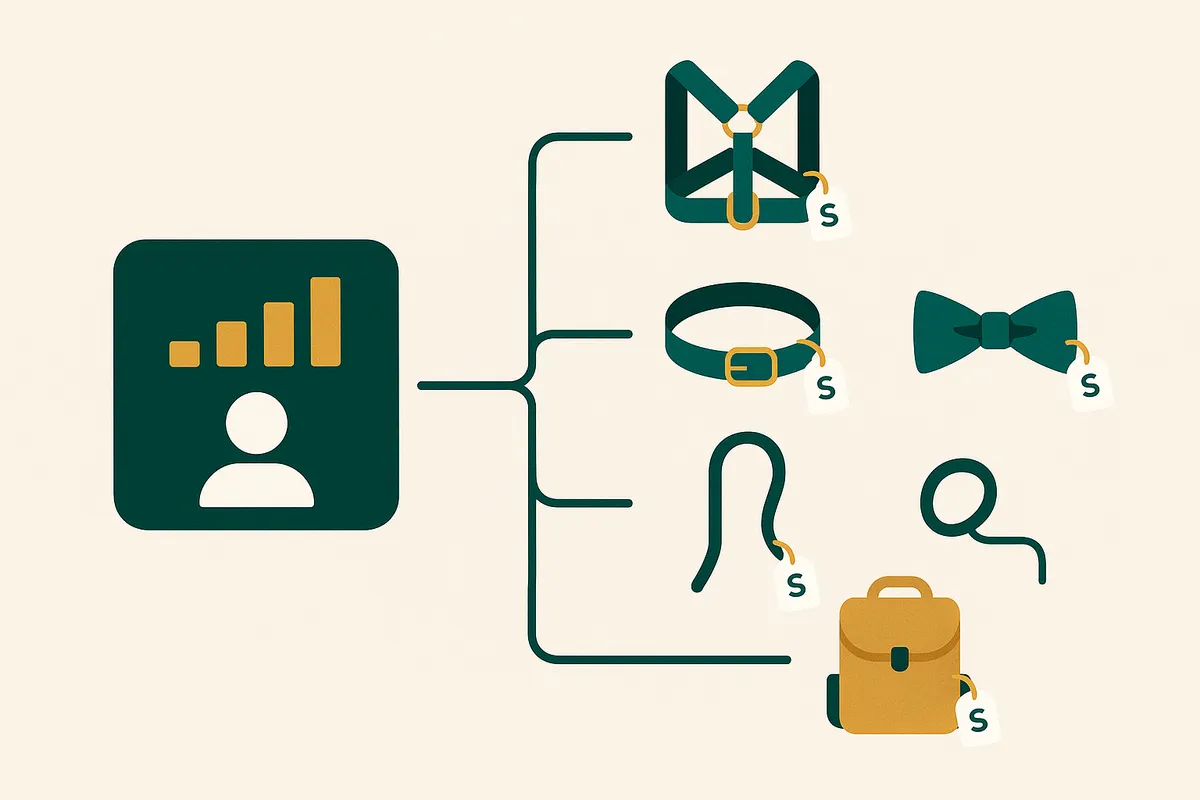
The fundamental rule of bundle inventory: your available bundle quantity equals the minimum stock level across all components. This is the MIN(components) formula.
Example: "Summer Walk Set" bundle contains 1x Floral Collar (stock: 45), 1x Matching Lead (stock: 12), 1x Poop Bag Holder (stock: 89). Available bundle quantity = MIN(45, 12, 89) = 12. You can only sell 12 complete sets because you only have 12 leads. It does not matter that you have plenty of collars and poop bag holders.
This gets more complex when a component is shared across multiple bundles. If the Floral Collar appears in 3 different bundle combinations plus selling individually, every sale from any channel reduces the available quantity for all other bundles containing that collar. Managing this manually across 10+ bundles is painful. Managing it across 151 bundles with 2,384 variants — as Bailey & Coco does — is impossible without automation.
How Shopify merchants currently handle bundle inventory
There are three common approaches, each with significant limitations:
Approach 1: Manual tracking in spreadsheets. Build a spreadsheet mapping each bundle to its components. Every time a bundle or component sells, manually update stock levels and recalculate available quantities. This works for 5-10 bundles but becomes a full-time job at scale. One missed update causes overselling.
Approach 2: Dedicated bundle apps. Apps like Shopify Bundles or third-party bundle builders handle the product page creation but many have limited inventory tracking. They may sync component stock on a schedule (every 15-60 minutes) rather than real-time, creating overselling windows.
Approach 3: Treat bundles as separate pre-packed products. Physically assemble bundles in advance and track them as independent SKUs. This eliminates the inventory calculation problem but ties up component stock in pre-packed bundles that might not sell, and you cannot easily break bundles apart to sell components individually.
Bailey & Coco: managing 151 bundles across 2,384 variants
Bailey & Coco sells dog accessories in 152 patterns. Many products are sold individually (collar, lead, harness, poop bag holder, bandana) but also in bundles (collar + lead set, walking set, complete outfit). With 152 patterns and multiple bundle combinations per pattern, they have 151 active bundle products containing 2,384 variants. The complexity is staggering. A single collar pattern (say "Vintage Floral") might appear as a component in: the Vintage Floral Collar + Lead Set, the Vintage Floral Walking Bundle (collar + lead + harness), the Vintage Floral Complete Set (collar + lead + harness + poop bag holder + bandana), and it is also sold individually. When any of these products sell, the available collar stock decreases, which affects the availability of every bundle containing that collar. And this calculation needs to happen across all 152 patterns simultaneously. Before implementing proper bundle management, Bailey & Coco experienced overselling on bundles roughly 3-4 times per week — leading to partial refunds, customer complaints, and the operational headache of either sourcing missing components urgently or disappointing customers.
Stop overselling bundles and start tracking components properly
Canopy gives Shopify brands the inventory clarity they need to grow.
How to set up bundle inventory tracking properly
Whether you use spreadsheets or software, proper bundle inventory tracking requires four elements:
1. Component registry: Every component product with its current stock level. This is your source of truth. Components are the individual products that exist in your warehouse.
2. Bundle definitions: A mapping of each bundle to its components and required quantities. The "Walking Set" requires 1x collar, 1x lead, 1x harness. The "Complete Outfit" requires 1x of five different products.
3. Real-time MIN calculation: Available bundle quantity = MIN(component stock / required quantity per bundle) across all components. If a bundle requires 2x of a component, divide that component's stock by 2 before comparing.
4. Cross-bundle allocation: When a bundle sells, decrement all component stock immediately. When a component sells individually, recalculate all bundles containing that component. This must happen in real-time to prevent overselling.
Weeks cover for bundles: a hidden complexity
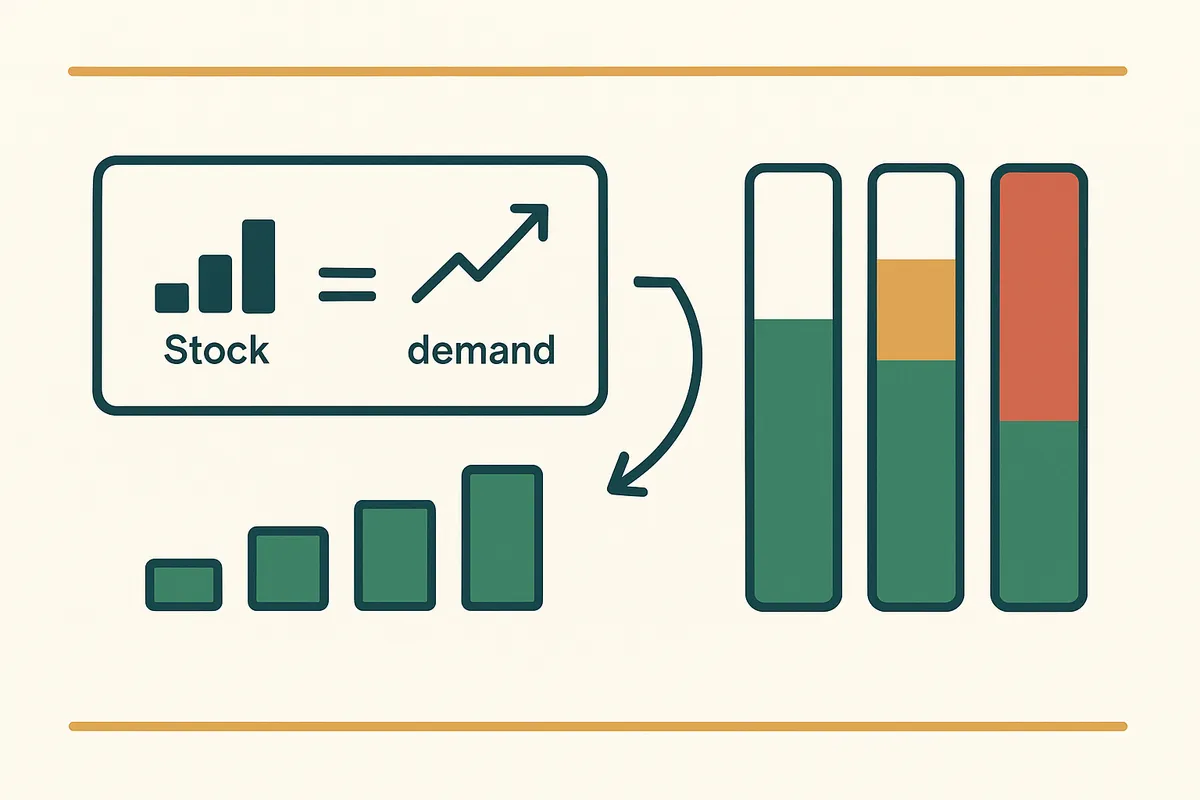
Calculating weeks cover for bundles adds another layer of complexity. You cannot simply divide bundle stock by bundle sales velocity — because bundle stock depends on component availability, which depends on component sales across all channels (individual + all bundles containing that component).
The correct approach: calculate weeks cover for each component individually, accounting for total demand across all products (individual sales + all bundle sales containing that component). The bundle's effective weeks cover is the minimum component weeks cover — the bundle will run out when its scarcest component runs out.
This means a bundle's reorder trigger is actually a component reorder trigger. If the leads component has 6 weeks cover but the collar has 20 weeks cover, you need to reorder leads — not the bundle itself. This is a distinction that spreadsheet-based systems almost always get wrong.

Pricing bundles when landed costs vary by component
Bundle pricing needs to account for the true landed cost of each component — not just the unit price from your supplier. If your collar costs £3.20 from the factory but £5.80 after duties, freight, and customs, and your lead costs £2.40 factory but £4.10 landed, your bundle COGS is £9.90 — not £5.60.
Many merchants price bundles using factory costs and wonder why their margins are thinner than expected. Always calculate bundle COGS using landed costs of all components. This is particularly important for brands importing from China where duties, freight, and customs can add 40-80% to the factory price.
A proper inventory management system calculates bundle profitability using the landed cost of each component, giving you true margin visibility for every bundle combination.

Frequently Asked Questions
No. Shopify treats each product as independent and does not natively understand that a bundle is made of component products. You need a bundle app or inventory management system to track component stock and calculate available bundle quantities.
The MIN(components) formula calculates available bundle quantity by taking the minimum stock level across all components. If a bundle needs 1 collar (stock: 50) and 1 lead (stock: 12), you can only sell 12 bundles. The scarcest component determines availability.
Use a bundle management system that recalculates available bundle quantities in real-time whenever a component sells (individually or as part of another bundle). Schedule-based sync (every 15-60 minutes) creates overselling windows. Real-time calculation eliminates this risk.
For most Shopify brands, assembling bundles when ordered (pick-and-pack) is better. Pre-packing ties up component stock in bundles that may not sell and prevents you from selling components individually. Only pre-pack if your bundles outsell individual components significantly.
Calculate weeks cover for each component individually, accounting for total demand (individual sales plus all bundle sales). The bundle's effective weeks cover equals the minimum component weeks cover. Reorder the scarcest component, not the bundle itself.
Related pages
Canopy's bundle engine — real-time component tracking, MIN calculation, and bundle profitability
How Canopy extends Shopify with bundle awareness and component stock management
Calculate true bundle profitability using landed costs of each component
Related Articles

Dead Stock Clearance: 8 Strategies to Recover Cash from Unsold Shopify Inventory
Sitting on dead stock that won't sell? These 8 clearance strategies — from flash sales to B2B liquidation — help Shopify brands recover cash and free up warehouse space.
How to Calculate Weeks Cover for Shopify: Formula, Examples & Free Calculator
Learn how to calculate weeks cover for your Shopify store with the exact formula, worked examples using real data from a 2,845 SKU brand, and a free inventory calculator tool.
Get early access to Canopy
The inventory system built for Shopify brands. No spam — just a heads-up when we launch.